
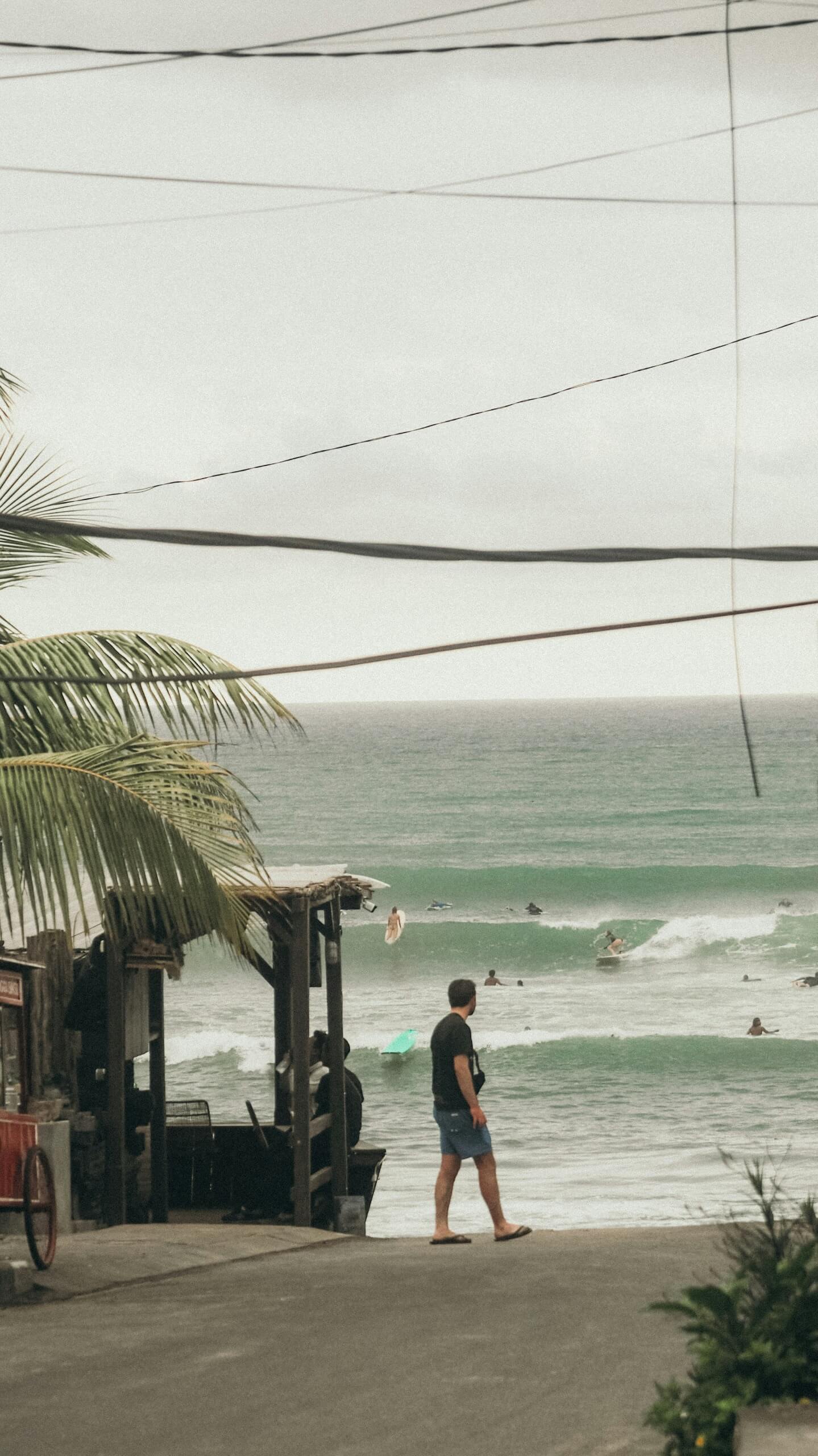
Reading Bali Tide Charts — The 4-Variable Surf Forecast
Why two surfers checking the same forecast end up at completely different spots — and how to actually read tide × swell × wind × period.
Most beginners check 'wave height' on Magicseaweed and stop there. Real forecasting is 4 variables, all interacting. Get this and you'll find empty waves while everyone else is paddling out at the wrong tide.
1. Tide — the make-or-break
Bali tides swing 1.5-2.5m. The same spot can be a flat lake at high and a perfect peak at low. Bingin: low tide. Uluwatu: mid-to-low. Berawa: mid-to-high. Always cross-check with a tide chart (Magicseaweed shows it).
2. Swell direction
Compass bearing the swell is travelling FROM. Bali wants 180-240° (SW). 200-220° lights up the entire west coast. Easterly swells (90-130°) wake up Keramas, Sanur and Nusa Dua.
3. Swell period
Time between waves, measured in seconds. Under 8s = wind chop. 9-12s = clean swell with line-up power. 13s+ = open-ocean groundswell that wraps into reef breaks beautifully. Period matters more than height.
4. Wind direction & strength
Offshore (against the wave direction): clean, holds up the face. Onshore (with the wave): blown out, mushy. In Bali, easterly trade winds (May-Oct) are offshore for the west coast. NW winds (Nov-Mar) are offshore for the east coast.
Pro tip
Build a personal table: for your 3 favourite spots, write down the tide × swell × wind combo that worked. After 30 sessions, you'll predict crowd-free perfect waves better than the forecasts can.
Frequently Asked Questions
→What's the best tide for Uluwatu specifically?
Mid to mid-low tide, around 0.6-1.2m on the chart. High tide kills the wave (it backs off the reef); dead-low tide makes it dangerously shallow on the takeoff zone. Always plan your session 90 minutes either side of mid-low.
→How do I read swell period quickly?
Check the number of seconds between waves on Magicseaweed or Surfline. Under 8s = wind chop (avoid). 9-12s = clean swell with line-up power (perfect). 13s+ = open-ocean groundswell that wraps deep into reef breaks beautifully (great).
→Which Bali spot is the most tide-sensitive?
Bingin. It only works at low tide (0.3-0.7m). At high tide it's a flat lake. Always check the tide chart BEFORE driving south — many surfers waste 90 minutes driving to Bingin only to find it dead at the wrong tide.
Where to Surf
Spots mentioned in this guide

Continue reading
 Wave theory
Paddle Technique for Bali — The 80/20 of Catching More Waves
The 5 paddling habits that separate the surfer who catches 8 waves a session from the one who catches 2. All learnable in a week.
 Wave theory
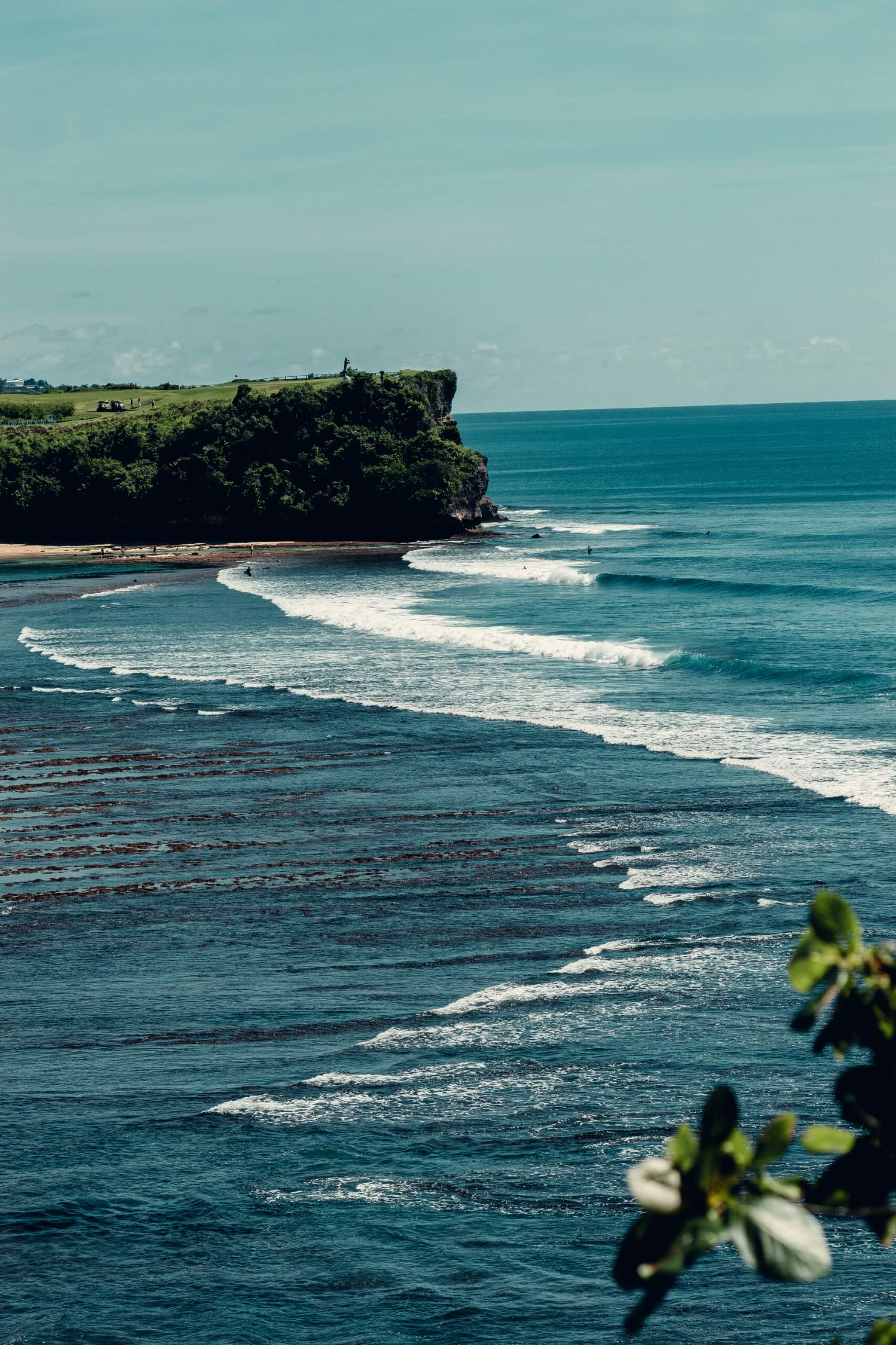
Reef Break vs Beach Break — Why the Same Wave Breaks Differently
Reef, sand, point, slab — what each break shape does to a wave, and which Bali spot teaches you the most for your skill level.
 Wave theory
Takeoff Geometry — Why the Wrong Angle Burns Sessions
Most missed waves in Bali aren't a paddling problem — they're a geometry problem. Learn the 3 angles that change everything.