
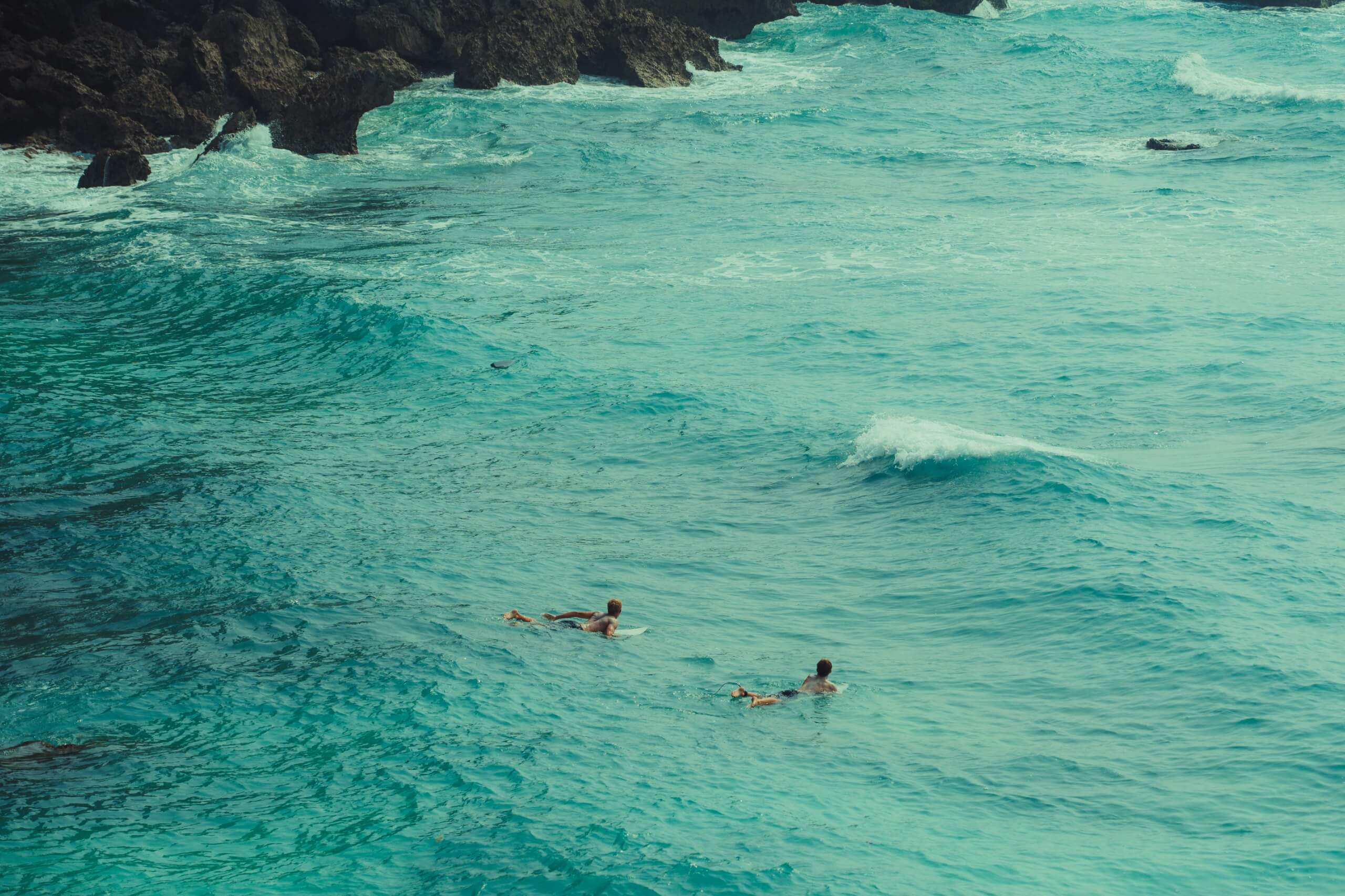
Paddle Technique for Bali — The 80/20 of Catching More Waves
The 5 paddling habits that separate the surfer who catches 8 waves a session from the one who catches 2. All learnable in a week.
Your wave count is roughly proportional to your paddle quality. Better paddlers catch more waves, get into them earlier, and surf longer. Here's how to fix it fast.
1. Hand cup, finger spread
Cup your hands slightly. Spread fingers a few millimetres apart. Together this gives you 12-15% more 'paddle' than rigid flat hands — the closest thing to a free upgrade.
2. Long strokes, low recovery
Reach forward with one shoulder rolled in. Pull all the way through to your hip. Bring your hand back to enter the water FORWARD of your shoulder, not above your shoulder. High recoveries waste energy.
3. Body position on the board
Nose 3-5 cm out of the water. Too high = drag. Too low = pearling. Adjust by sliding forward/back on every duck dive. Different boards need different positioning — find yours and remember it.
4. Cadence at the takeoff
Most beginners paddle slow when the wave starts lifting them. Wrong. That's the moment to accelerate to 130% effort for 4-5 strong strokes. Then you're on it.
5. Out of the water: train upper-body endurance
Bali sessions are 2-3 hours. If your paddle gives out at hour 1, you're done. Pull-ups, swimming and 30-minute paddle drills on flat days at Sanur or Berawa work miracles.
Pro tip
Film yourself paddling from the side (any friend, any day, any angle). 90% of paddle improvements come from looking at one bad rep on tape and fixing exactly that one thing.
Frequently Asked Questions
→Why is hand position so important for paddling?
Cup the hand slightly with fingers spread a few millimetres apart. This gives you 12-15% more 'paddle' than rigid flat hands — the closest thing to a free upgrade. Most surfers paddle with flat boardy hands their whole life and miss 100+ waves a year.
→What's the right body position on the board?
Nose 3-5 cm out of the water at rest. Too high = drag (you're sliding back into the wave's energy). Too low = pearling on takeoff. Adjust forward/back on every duck dive. Different boards need different positioning — find yours and remember it.
→How do I build paddle endurance without a pool?
30-minute paddle drills on flat days at Sanur, Berawa or any glassy lagoon. Out of water: pull-ups (3 sets to failure, 3× a week) and swimming 1km flat in any pool 2× a week. After 6 weeks you'll feel the difference at the lineup — fresh at hour 3 instead of dead at hour 1.
Continue reading
 Wave theory
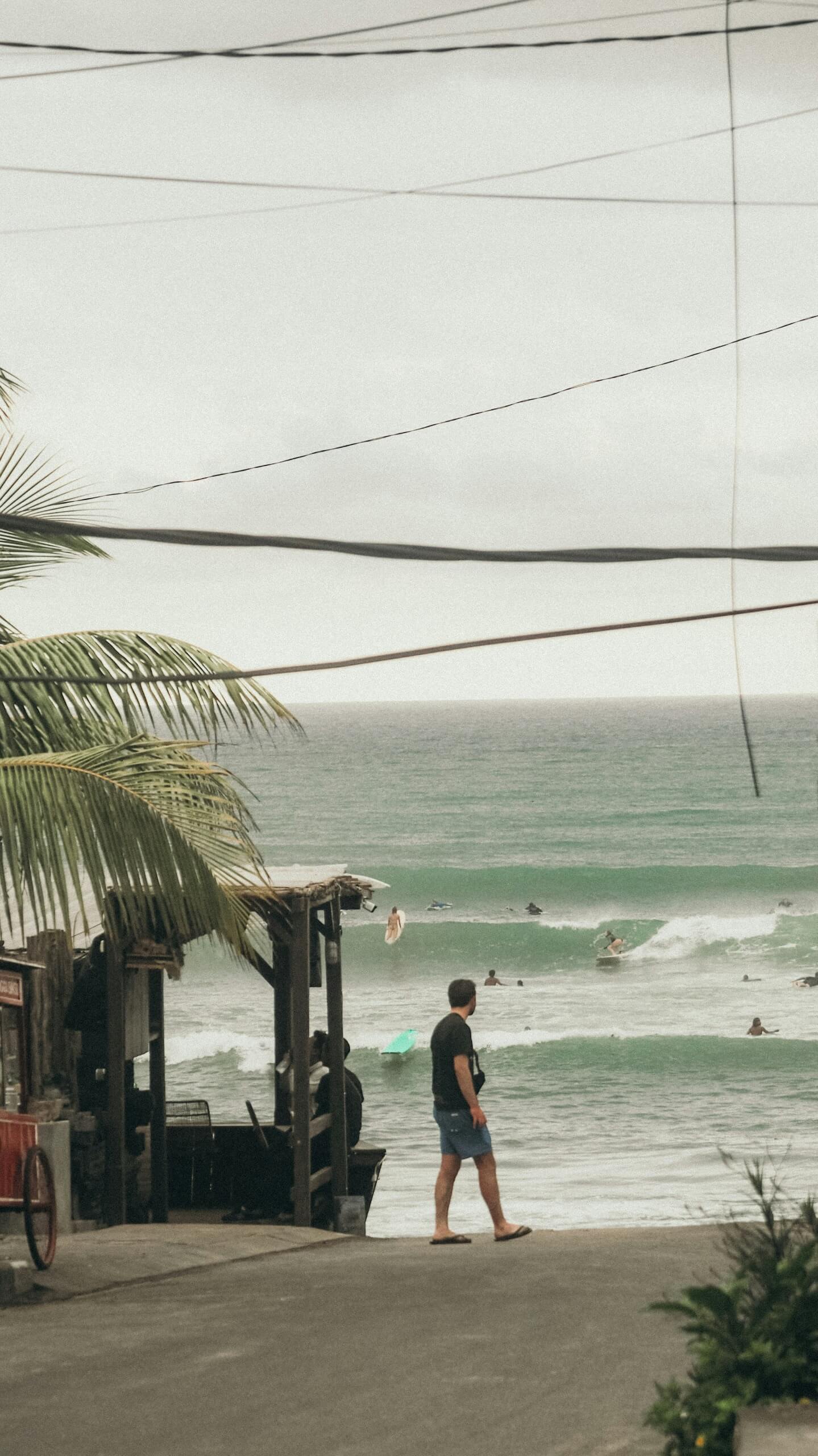
Reading Bali Tide Charts — The 4-Variable Surf Forecast
Why two surfers checking the same forecast end up at completely different spots — and how to actually read tide × swell × wind × period.
 Wave theory
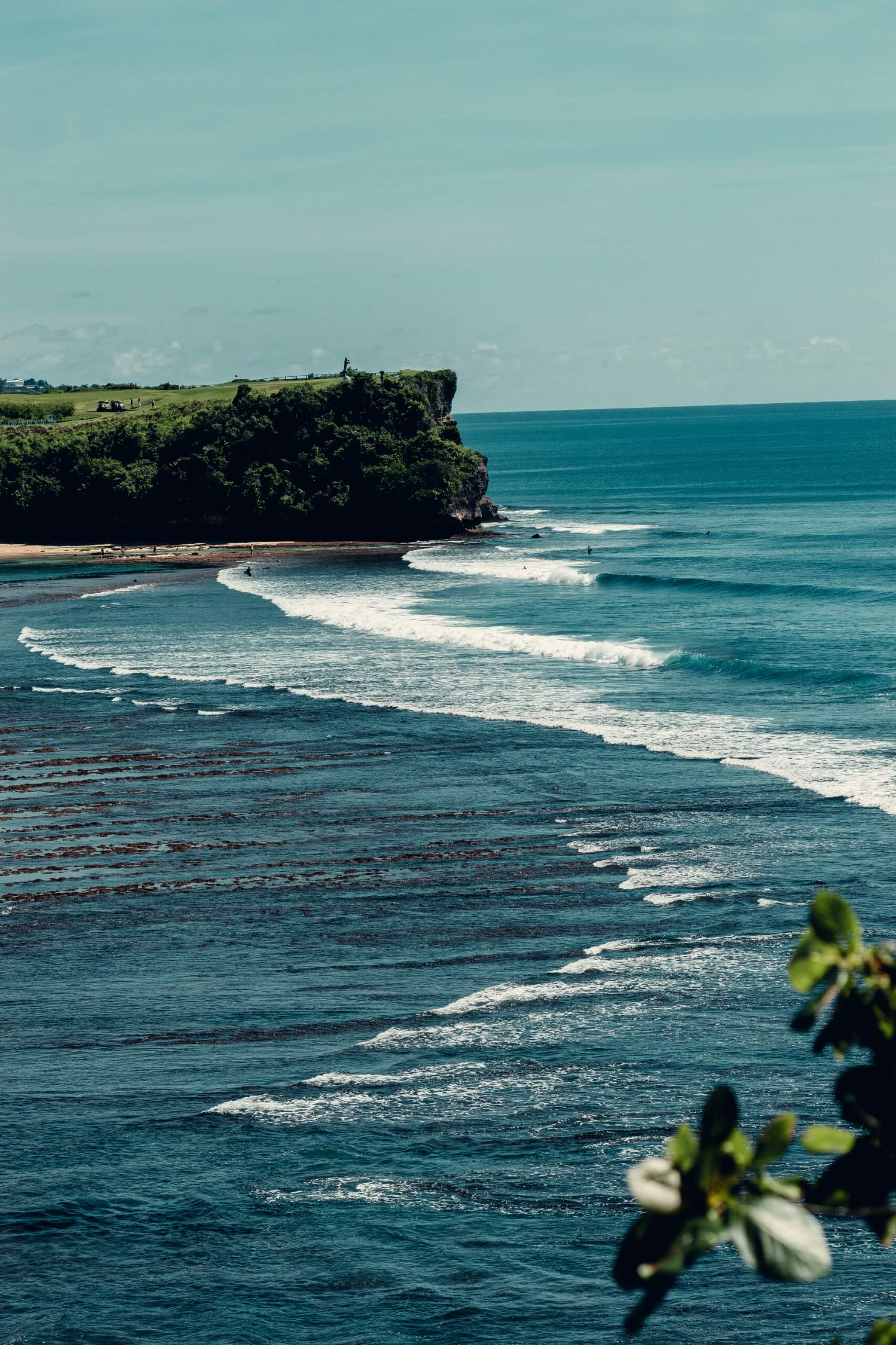
Reef Break vs Beach Break — Why the Same Wave Breaks Differently
Reef, sand, point, slab — what each break shape does to a wave, and which Bali spot teaches you the most for your skill level.
 Wave theory
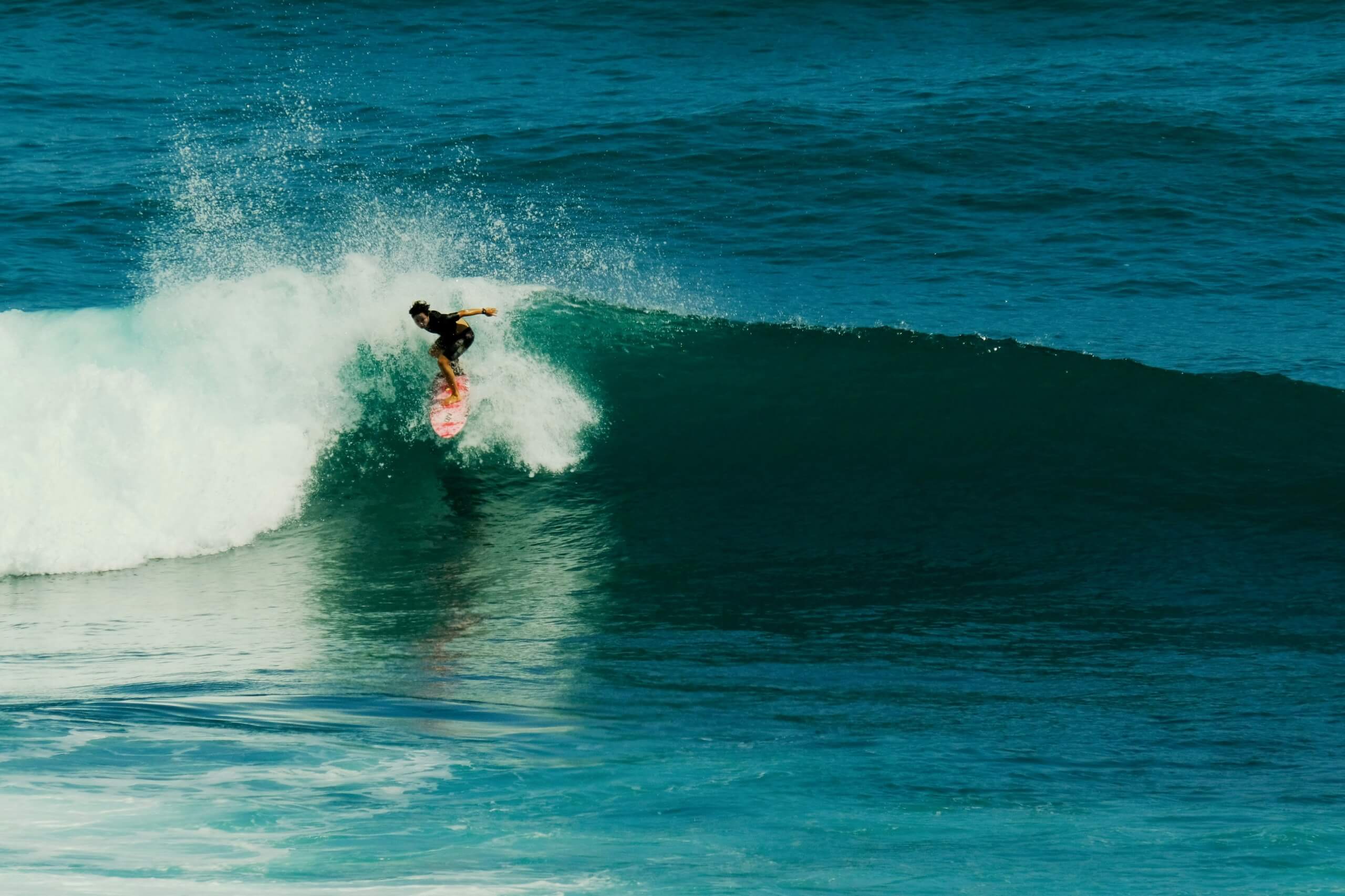
Takeoff Geometry — Why the Wrong Angle Burns Sessions
Most missed waves in Bali aren't a paddling problem — they're a geometry problem. Learn the 3 angles that change everything.