
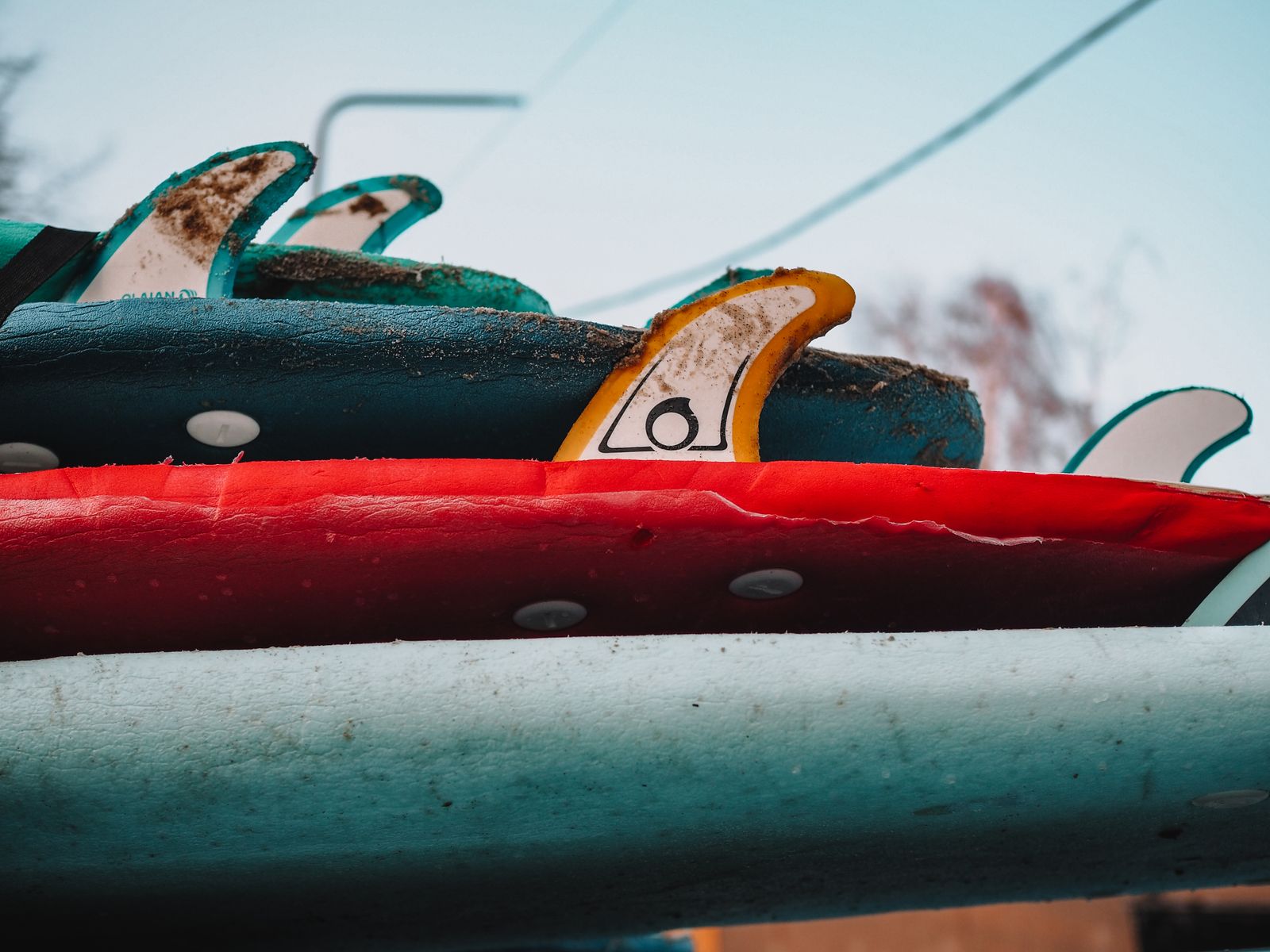
Surf Fins Explained: Anatomy, Flex, Setups & Sizing
Fins are your board's steering system. A complete reference to fin geometry, flex, construction, setups (single, twin, thruster, quad) and how to size them to your weight — with quick-pick charts for every Bali wave.
Fins are the steering system of your surfboard — they decide drive, hold, turning behaviour and speed. Even tiny changes to length, width, rake or flex noticeably change how a board feels underfoot. This guide pulls every parameter, construction, setup and size into one place, then boils it down to quick-pick charts you can use before your next Bali session.
How a fin actually steers your board
Every fin is described by the same set of values. Base, depth and rake together form the 'plan shape' (the outline and area you can see); foil, cant, toe and flex control the hydrodynamic behaviour you feel but can't see. Understanding the seven parameters below is what lets you read a fin off the shelf instead of guessing.
1. Fin geometry — the seven parameters
The plan shape (base, depth, rake, area) plus the hidden hydrodynamics (foil, cant, toe, flex).
| Parameter | What it controls | Short / small / upright | Long / large / raked | Affects |
|---|---|---|---|---|
| Base | Length of the fin where it meets the board (its widest point) | Less drive, tighter and faster turning arc | More drive and speed, longer drawn-out turns | Drive |
| Depth | Distance from base to tip — how deep the fin sits in the water | More release, the tail breaks free easily (loose) | More hold and stability, locked-in through turns | Hold |
| Rake / sweep | The angle/curve the outline is swept back toward the tail | Tight pivot, snappy — good in weak, choppy waves | Long, powerful drawn-out turns — good on big walls | Pivot |
| Area | Total surface from base x depth x outline | Looser, more playful, easier to manoeuvre | More hold and control (big waves, heavier riders) | Hold + control |
| Foil | Thickness profile from leading to trailing edge | Flat/asymmetric (side fins) for speed and tracking | Symmetric 50/50 (centre) for directional stability | Lift |
| Cant | The angle the side fins tilt away from vertical | 0 degrees / upright for more straight-line speed and drive | More cant for a more responsive feel, but more drag | Response |
| Toe | How much the front of the side fins points to the board's centre | Little toe for more straight-line speed | More toe-in for a turnier, more reactive board | Responsiveness |
| Flex | How much the fin bends and how fast it snaps back | Flexible for a looser, skatey, forgiving feel (speed loss if too soft) | Stiff for drive, stability and fast projection out of turns | Speed + feel |
Pro tip
Changing fins is the cheapest 'new board' money can buy. Before you sell a board you've fallen out of love with, try a different set of fins in it — a stiffer, more upright fin can wake up a mushy-feeling shortboard completely.
2. Flex and construction
Flex is set mostly by the material. Two things matter: stiffness (how much force it takes to bend the fin) and recoil (how fast it springs back). Stiff fins give drive, hold and predictability — ideal in steep, powerful waves. Flexible fins feel looser and more playful, but wash out if there's too much flex.
| Construction | Flex | Character / feel | Ideal for |
|---|---|---|---|
| Plastic / urethane (injection-moulded) | Very flexible | Soft, safe, cheap and hard to break — but loses hold and 'washes out' | Soft-tops, beginners, small soft waves |
| Composite / glass-filled (e.g. GlassFlex, Thermotech) | Medium | Consistent, durable, great value. A solid all-rounder | Beginner to intermediate, small to medium |
| Fibreglass (hand-layered, foiled) | Medium–stiff | Precise, lots of drive and hold, very predictable. The performance classic | The standard choice, medium to large waves |
| Performance core (honeycomb core + glass/carbon wrap) | Tuned | Light, lively, purpose-tuned flex with fast recoil. Reactive and fast | High-performance, ambitious surfers |
| Carbon (tips or full carbon) | Stiff | Light, extremely stable, fast recoil for lots of projection and drive | Powerful, steep waves; fast, aggressive surfing |
| G10 / wood (laminate or natural material) | Very stiff / classic flex | G10: dense, tough, lots of hold (keels, sidebites). Wood: classic flex and looks | Fish and keels (G10), single fins and longboards (wood) |
3. Setups and configurations
The number and placement of fins can transform the exact same board shape. The rule of thumb: fins closer together and further forward equals looser and more manoeuvrable (small waves); fins further apart and further back equals more hold and stability (big waves).
| Setup | Fins | Character | Ideal conditions | Typical boards | Level |
|---|---|---|---|---|---|
| Single fin | 1 · large, centre-back | Smooth drawn-out arcs, lots of glide, low drag, stable in trim — sluggish in tight turns | Small–medium and long, rolling waves | Longboard / log, retro eggs | All · classic |
| Twin | 2 · equal size, on the rail | Fast, loose, skatey and playful. Lots of speed in weak waves — can break free once it gets big | Small–medium waves | Fish, retro shapes | Intermediate · fun |
| Thruster (tri-fin) | 3 · equal size | The benchmark. Balanced control, drive and pivot, very predictable. Side fins add lift, the centre stabilises | All-round; shines in clean, powerful waves | Shortboards, hybrids, funboards | Beginner–pro |
| Quad | 4 · no centre fin | Fast down-the-line, less drag, loose like a twin — but with more control. Cluster position defines the feel | Small mushy waves OR hollow, steep barrels | Fish, step-ups, barrel boards | Intermediate+ |
| 2 + 1 | 1 large centre + 2 sidebites | The stability of a single fin plus extra control and manoeuvrability from the sidebites. More drag than a pure single or thruster | Small–medium waves, clean or choppy | Longboards, eggs, mid-lengths, SUP | Beginner–intermediate |
| Twin + trailer | 2 + 1 small trailer | The speed and loose feel of a twin, plus a small rear trailer for extra tail stability | Small–medium waves | Fish / twinnies | Intermediate+ |
| 5-fin box (convertible) | 5 boxes (not all ridden at once) | No fixed setup — the five boxes let you switch between twin, thruster and quad to suit the conditions | Maximum flexibility for changing conditions | Shortboards, hybrids | All |
Which setup actually suits Uluwatu vs Berawa vs Medewi is a whole topic on its own — we break it down wave-by-wave for Bali in a dedicated guide.
4. Sizing by rider weight
The single most important factor for fin size is rider weight — it sets the load the fin has to carry. Bigger fins mean more hold and control; smaller fins feel looser. The FCS and Futures charts are not identical and deliberately overlap. When in doubt: powerful surfers, heavy waves or wide tails go one size up; narrow, fast-driven tails go one size down.
FCS and Futures sizing charts overlap on purpose — use them as a starting range, not gospel.
| Size | FCS (kg) | FCS (lbs) | Futures (kg) | Futures (lbs) |
|---|---|---|---|---|
| XS | up to 55 | up to 120 | 34–52 | 75–115 |
| S | 55–70 | 120–155 | 48–70 | 105–155 |
| M | 65–80 | 145–175 | 65–88 | 145–195 |
| L | 75–90 | 165–200 | 80+ | 180+ |
Pro tip
Your board's fin boxes are FCS or Futures — they are not cross-compatible. Check which system your board runs before you buy fins, and pack the right fin key. Loose or wobbly fin boxes on a used board are an expensive repair, so always test them before you pay.
5. Quick-pick by wave condition
- SMALL / SOFT: twin or quad, a smaller and more flexible fin with a little rake for speed and playfulness.
- CLEAN / POWERFUL: thruster with medium stiffness for control through turns and bottom-turns.
- STEEP / HOLLOW / BARREL: a stiff, deep fin with more rake; thruster or quad in the back-outside for maximum hold.
- LONG & ROLLING: single fin or 2+1 for glide, trim and nose-riding.
Quick-pick by riding goal
- SPEED / FLOW: quad or twin, an upright fin, little cant, a longer base.
- TIGHT TURNS: an upright fin (little rake), shorter base, more cant for pivot.
- CONTROL / BIG WAVES: a larger, deeper, stiffer fin; thruster for hold and predictability.
- PLAYFUL / LOOSE: a smaller, more flexible, flatter fin; twin or quad with a forward cluster.
Quick-pick by level
- BEGINNER: thruster (or 2+1 on a longboard), a larger/stiffer fin for stability.
- INTERMEDIATE: match the fin to your weight, medium flex; start experimenting with twin and quad.
- ADVANCED: fine-tune via flex, rake and cluster position session by session.
Quick-pick by board type
- SHORTBOARD: thruster or a 5-fin box (choose thruster or quad).
- FISH: twin, quad or twin + trailer.
- MID-LENGTH: 2+1, thruster or twin.
- LONGBOARD: single fin or 2+1.
Fins interact with the rest of your quiver too — the right fin for a mid-length is worthless if the board volume is wrong for your level, and shortboard vs longboard changes everything about what fin even makes sense.
Most used boards on PASARA come with fins included — check the listing photos and description, and factor a fresh set into your budget if they're missing or worn.
Frequently Asked Questions
→How do I pick the right fin size for my weight?
Rider weight is the number one factor — it sets the load the fin carries. As a starting point: under 55 kg → XS, 55-70 kg → S, 65-80 kg → M, 75-90 kg → L. FCS and Futures charts overlap on purpose, so go one size up for powerful surfing, heavy waves or a wide tail, and one size down for a narrow, fast-driven tail.
→What's the difference between a thruster and a quad in Bali?
A thruster (3 fins) is the balanced all-rounder — drive plus control, and it shines in clean powerful waves like Uluwatu and Bingin. A quad (4 fins) has less drag and more down-the-line speed, so it comes alive both in small mushy Canggu days and in hollow, steep barrels. Many Bali surfers pack a thruster set for everyday surf and a quad for glassy afternoon speed sessions.
→Are FCS and Futures fins interchangeable?
No. FCS and Futures are two different box systems and are not cross-compatible. Check which system your board runs before buying fins, and carry the matching fin key. On a used board, always wiggle-test the fin boxes — a loose or wobbly box is an expensive repair.
→Does changing fins really make a difference?
Yes — it's the cheapest 'new board' you can buy. A stiffer, more upright fin adds drive and hold to a board that feels sluggish; a smaller, flexier fin loosens up a board that feels stiff. Before selling a board you've fallen out of love with, try a different fin set in it first.
Where to Surf
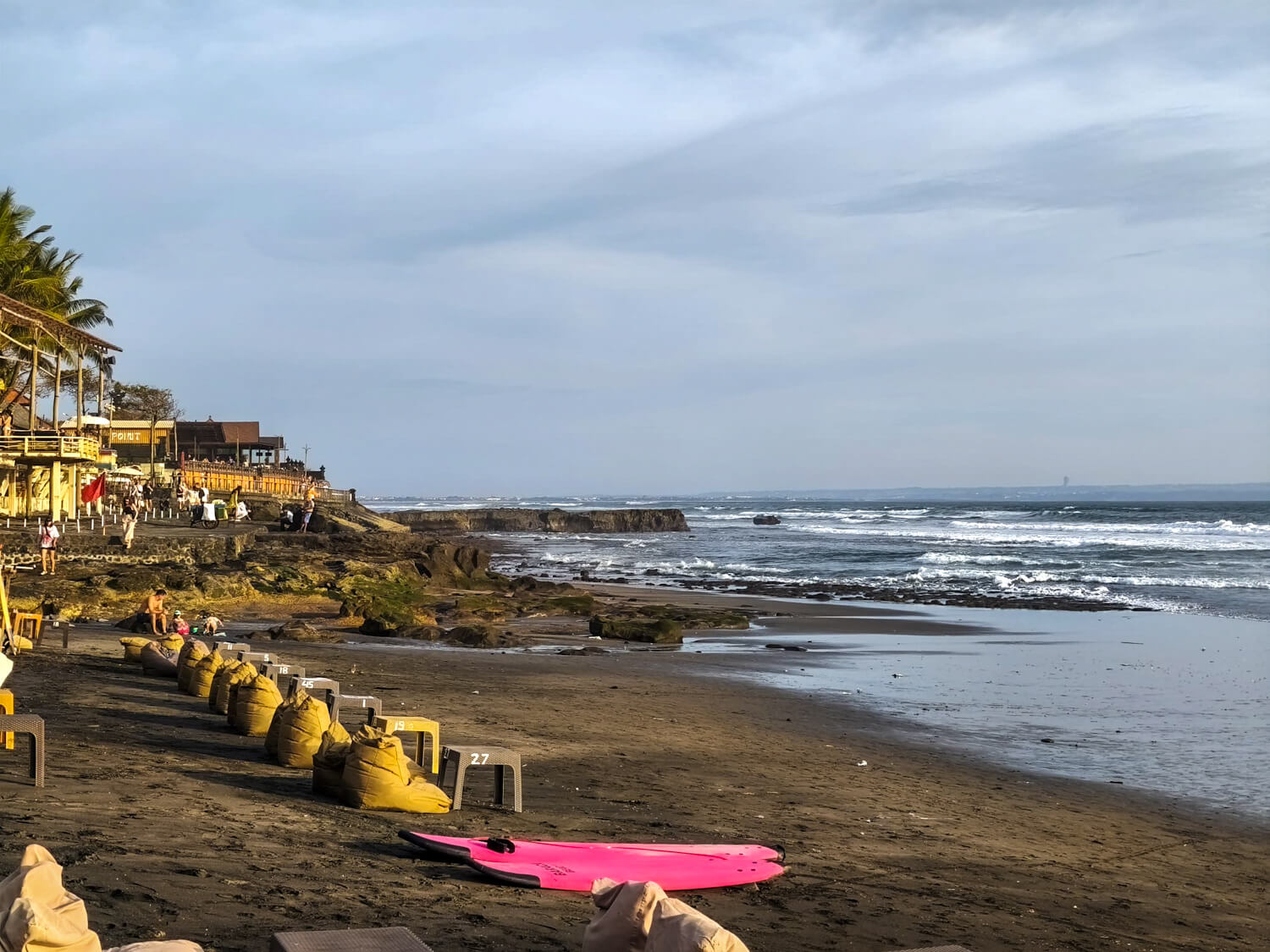
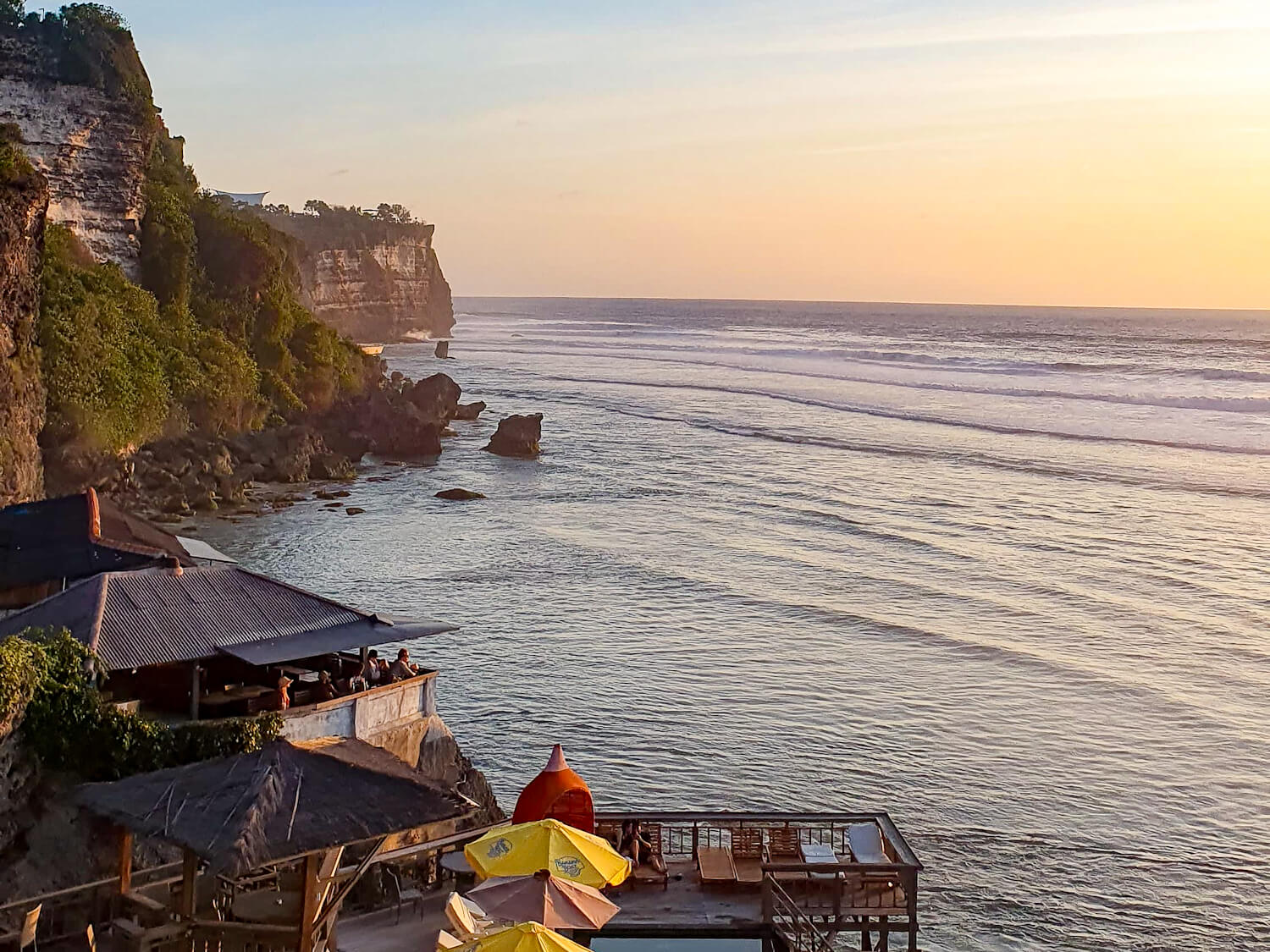
Spots mentioned in this guide
Continue reading
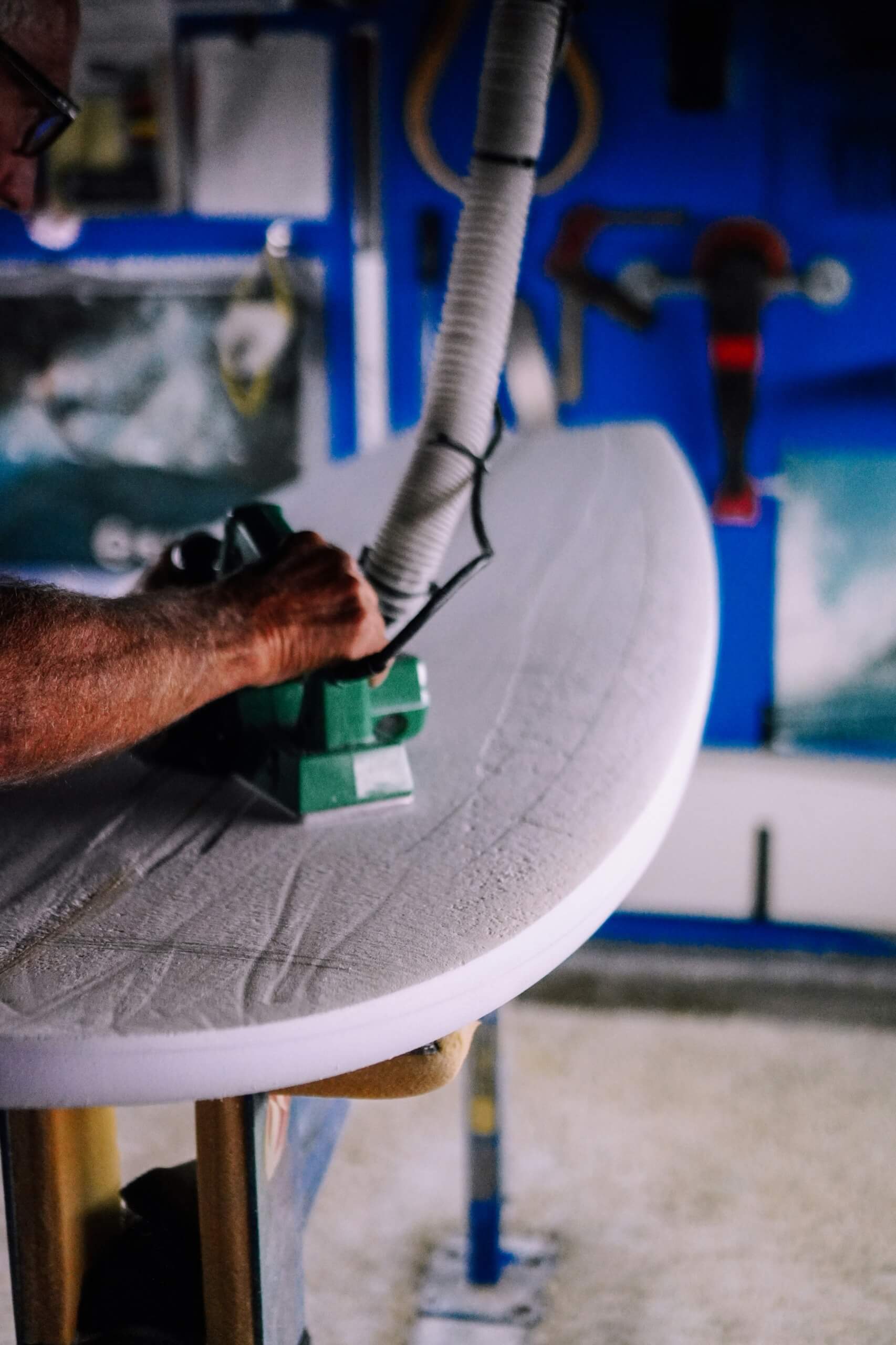 Maintenance
Ding Repair in Bali: Where to Get Your Board Fixed Fast
Hit the reef? Don't panic. Here's the field-fix vs shop-repair decision tree, with realistic Bali pricing and turnaround times.
 Maintenance
Fin Setup Theory for Bali — Twin, Thruster, Quad?
How to choose fins for Bali's variety of waves — fast Bukit reefs, soft Berawa beach breaks, and everything between.
 Maintenance
Leash Care, Wax Combs & the Small Things That Save Sessions
The unsexy maintenance habits that make surfboards last 3× longer in Bali — and why every traveller should pack a 50-cent leash string.